Sunday, August 26, 2018

Day 51 - Kamiah, Idaho to Winchester, Idaho

I am having continental breakfast in The dining area of my inexpensive motel. There are a few sportsmen sitting around the room talking about hunting elk and other big game. I have nothing to add to that conversation.In walks a middle-aged man and woman and they sit down at the table next to me. 

He is not a quiet man. He is an angry man who uses some variant of the F word at least once in almost every sentence. He lives north of Seattle and there are elk on his property all the time. The f’ing Seattle liberals Won’t let him shoot them so he has to come to Idaho to hunt. He Just got married yesterday. I offer congratulations and get almost no acknowledgement . He and his pride are in Idaho to look at hunting properties, outside the reach of those f’ing liberals. His bride says nothing.

I took the incredibly hilly, safer of 2 routes to Lewiston that was recommended by adventure cycling. My cycling friend from Barcelona went on the very flat, more dangerous alternate route through orofino. If I had this to do over again heading westward, I would take my chances with the alternative!
I am now west of the mountain ranges and am back back in gorgeous golden wheatfields.

This is land well outside the scope of the Louisiana purchase, which extended only as far west as the Missouri Rivershed, That being the continental divide. 

When the corps of Discovery arrived in this area exhausted and almost starved from their trip over the better route, They spent two weeks building canoes with the help and expertise of the Nez Perce Indians. The Indians fed the starving young Americans Salmon and roots. The food was so foreign to their systems that they all got terribly sick.

I can’t tonight next to three ladies from Lewiston. They invited me over for dinner and I gladly accepted Since the only restaurant in town was closed for renovation And I am getting tired of eating sardines.

Two of the women were about my age and one was absolutely convinced that as a teenager she had been abducted by Ted Bundy. A guy in a Volkswagen similar to the one he drove picked her up under false pretenses and offered to take her to a party. Instead of taking her to the party he started driving out of town. Realizing she was in serious trouble she reached across and stomped on the brake  pedal, tumbled out of the car and ran into the brush. He ran after her but was unable to find her inThe thick brush and darkness. 

Around that same time the dismembered body of a woman from Lewiston was discovered in the area. The murder was never solved. Ted Bundy did not confess, but is known to have been active in Idaho at the time.

That sure made for a very chilling late night story in a lonely Campground,

Friday, August 24, 2018

Day 50 - Wilderness Gateway Campground, Idaho to Kamiah, Idaho

Today was a spectacular day featuring lovely weather and outstanding scenery on highway 12 along the Clearwater River.


I stopped Along the way for some magnificent huckleberry pie with huckleberry ice cream and for some fresh fruits from Emilio, of WOW fruits.


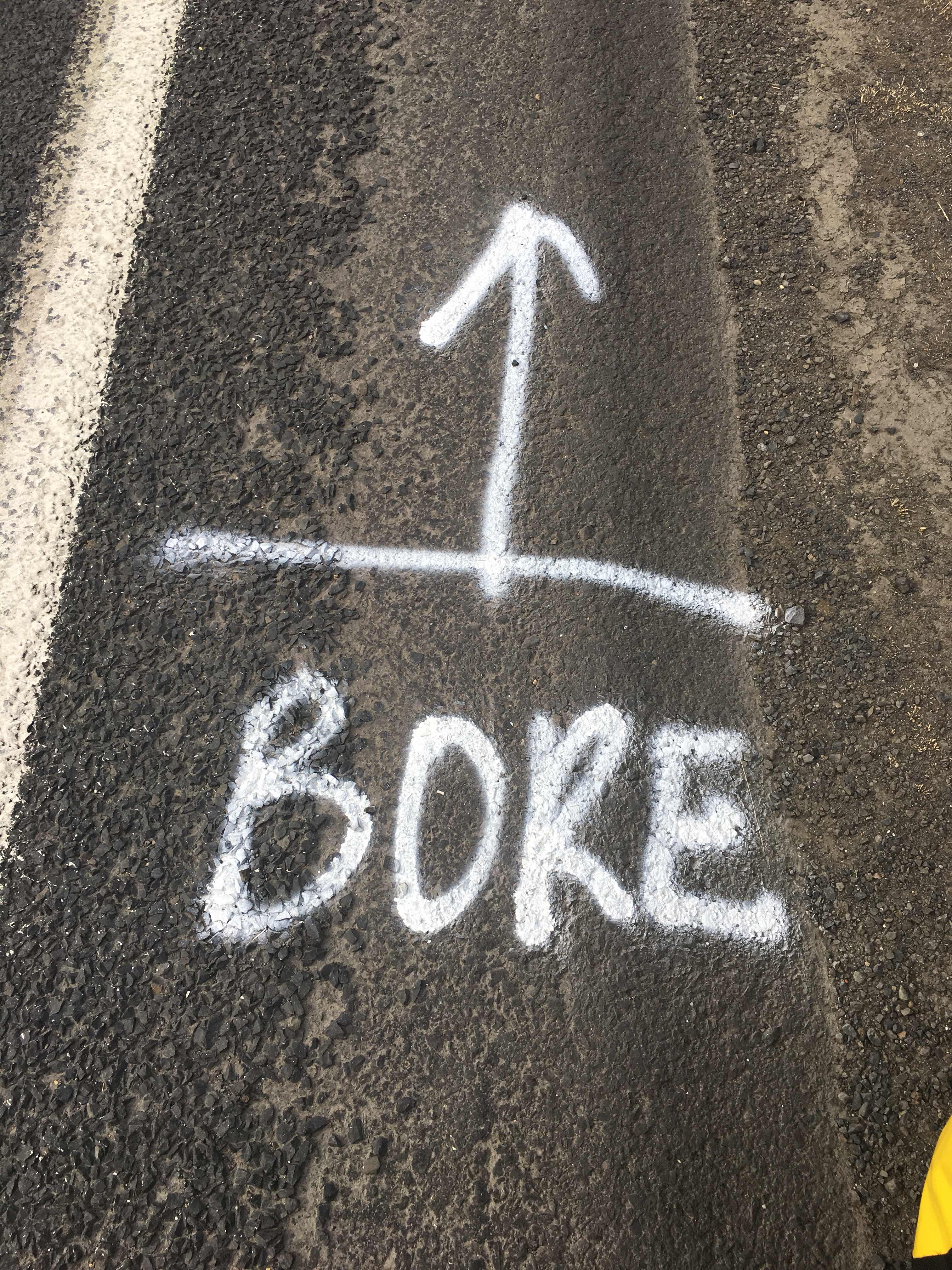
The road workers are sending me another message About the road ahead.


Day 49 - Powell, Idaho to Wilderness Gateway Campground, Idaho

I am traveling on a gorgeous stretch of U.S. Highway 12 that follows the lovely Lochsa river beneath the mountain ridge that the expedition discovery traveled. Lewisand Clark could not travel along the river because their horses could not cross the gullies of the numerous streams that come down from these mountains.

It is actually safe to drink the water from the streams and many people do.


I took two hikes up  to warm springs today.


I had an interesting experience on the road today. It was reminiscent of the slow speed O.J. Simpson bronco chase. 

A guy in a white SUV passed me traveling at about 50 mph. In close pursuit were four police cars, all with their flashers on. The guy swerved back and forth into the passing lane. But there was absolutely no place to go. Highway 12 runs through the national Forest and is tightly bounded by the mountains on one side and the Lochsa river on the other. 

I later learned from someone on a construction crew that The pursuit ended miles down the road where the road was blocked by construction equipment. The suspect, who I understand was allegedly running drugs,was apprehended Without further incident.

Many of the cedar trees i am seeing are trees that Lewis and Clark would’ve seen. Cedar trees in this area can live up to 3000 years and grow to over 200 feet tall. Many, however, are killed prematurely by forest fires started by lightning strikes, a natural phenomenon that is very common out here.


I camped  tonight with Robert, a fellow cyclist from Barcelona who is doing a tour of the American and Canadian national parks in the Pacific Northwest. A fellow camper, who is also a bicycle enthusiast, invited both of us over to his campsite where he treated us to a spectacular dinner of fresh rainbow trout he had caught.


Day 48 - Missoula, MT to Powell, Idaho

We know a tremendous amount about the expedition discovery from the journals that Lewis, Clark and others kept. The only physical evidence that has been uncovered was at Travelers’ rest in Lolo, Montana, just outside of Missoula. Lewis and Clark camped there for a couple of days starting on September 9, 1805, and again on their return in early July, 1806.

In 1996, archaeologists  discovered at Travelers’ Rest evidence of a latrine dug in the exact location in which military protocol at the time would have required. There they also discovered evidence of mercury, which they believe came from medication that Lewis administered to two privates who are suffering from constipation.


Lewis and Clark made to fateful decisions at traveler’s rest. In 1805 they decided to push through the mountains beginning on September 11. They apparently did not realize how early winter arrives in this region. The mountain peaks seemingly stretched forever, there was little food and a lot of snow, and the corps of discovery almost starved.


In 1806, Lewis and Clark made another questionable decision while at travelers’ rest to divide the Corps of Discovery in order to explore more territory. Lewis and his men went north to explore the Marias river and Clark and his men went South to explore the Yellowstone River. They met up six weeks later in North Dakota. While traveling separately Lewis was shot in the buttocks by one of his own men and killed two young Blackfeet Indians who were trying to steal their horses.
After spending a fair amount of time at Travelers rest, it was up and over beautiful Lolo Pass.


I camped on the grounds of the gorgeous Lochsa Lodge, a big game hunting lodge on the beautiful Lochsa River.


Tuesday, August 21, 2018

Two Days in Missoula

Missoula is an exceptionally cool town. The kind a town that makes you want to stay a while. I stayed for two days. 

Like most touring cyclists, my first stop was at the headquarters of Adventure Cycling, a fabulous organization that produces incredibly detailed and accurate maps for cyclists covering many trails throughout the night states in parts of Canada.  It also organizes and supports all kinds of group bicycle tours. It is a non-profit organization that employees 40 people who are passionate about cycling.

They are housed in a building that is a converted Christian Science church. They take a Polaroid picture of every touring cyclist who visits and places it on their wall of fame.


I also rode and walked Around Missoula, including a hike up to the “M” on a mountain that overlooks the campus of the University of Montana and the city.


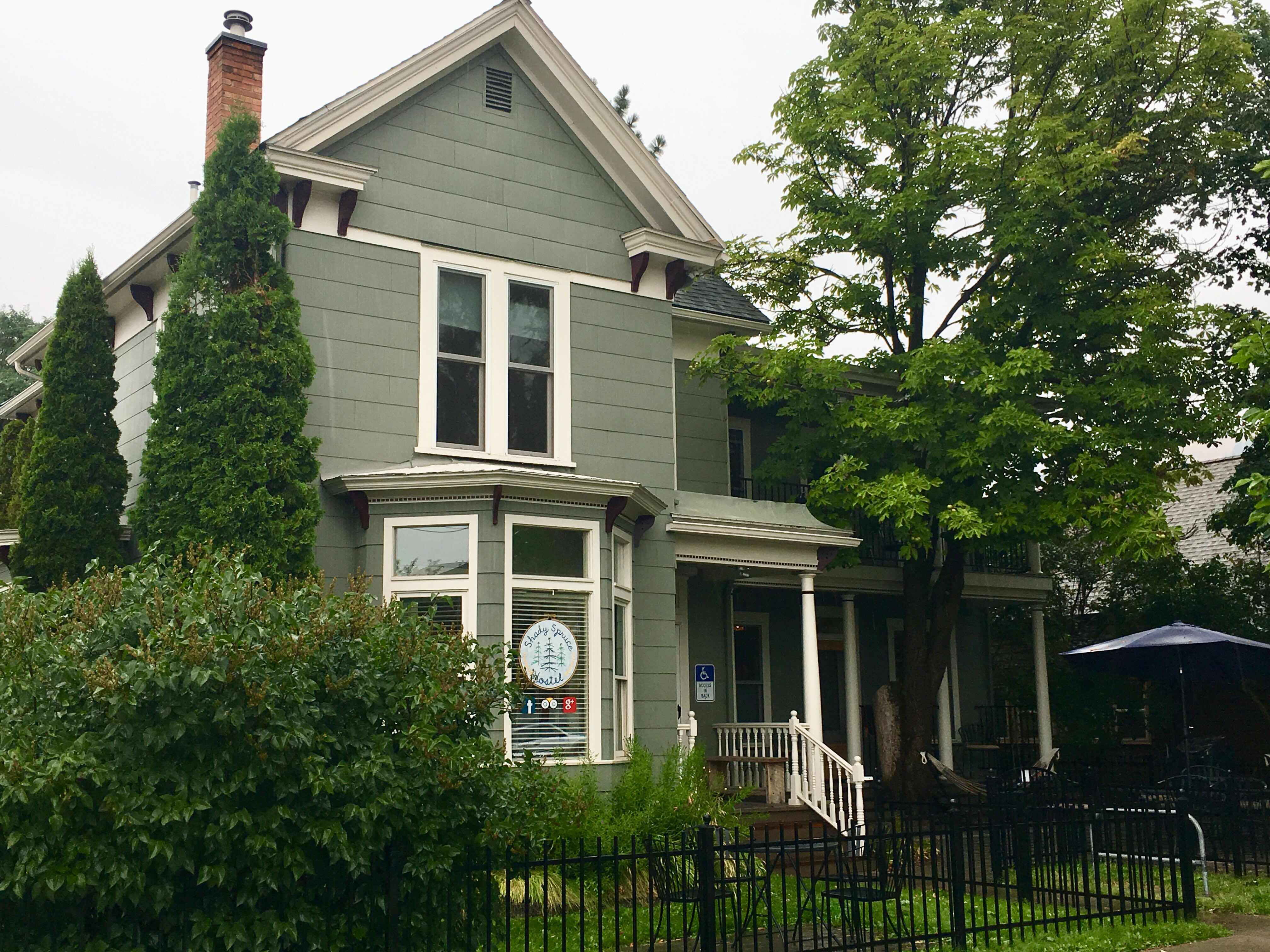
I stayed for two nights in a bunk room in a wonderful 
Hostel located one block away from adventure cycling in the center of downtown Missoula. There I met many really nice people with whom I dined and explored the city.


If you know me you will not be surprised that I attended the Missoula Ospreys minor league baseball game in their gorgeous stadium.


Cowboys and Bureacrats

In Lewistown I camped next to a guy who had worked for ten years for the Bureau of Land Management. He was part of a team whose job it was to determine what land satisfies the criteria for being designated as a "Wilderness Area" under the Wilderness Act of 1964. The idea is that wilderness areas should be preserved and protected.  If a parcel of land is so designated it becomes the property of the Federal government without compensation to the prior landowner, but a rancher can still apply for a grazing permit so that he can continue to use the property on his ranch.

My fellow camper told me of a meeting he and his colleagues had with area ranchers to discuss the criteria for designating property as a wilderness area and involving them in decisions. Five minutes into the meeting a rancher who happened also to be a state court judge stood up and interrupted. Young man, he said in a menacing tone, if you want solitude I have a jail cell just for you. The ranchers all stood up and applauded. With that the meeting abruptly concluded.

The second largest wilderness area in the continental United States is near Lincoln and extends northward almost to Glacier National Park. It is home to many grizzlies (who I am told are becoming so common in this area that they may soon be taken off the list of endangered species) and a wide variety of other wildlife, including even some wolverines (Go Blue!).

In response to the question of how much wilderness area America needs, early 20th century conservationist Bob Marshall, who fought to have much of this land protected, famously replied, "How many Brahms symphonies do we need?"

One person who did not subscribe to Bob Marshall's view was James Watt, a Wyoming native who served as Secretary of the Interior in the Reagan Administration. My campground neighbor told me that he and his colleagues did fieldwork for months to come up with a comprehensive description of a huge amount of Montana ranch land and delivered the report to Washington. Without ever looking at the report, Watt announced publicly that not one acre of land would be designated as wilderness area.

East of Missoula, it is hard to find a Montanan who does not believe that the Federal Government is too big, too intrusive and not to be trusted.


The activities of the Bureau of Land Management contribute greatly to this perception. Someone I met in Lincoln told me that the Federal Government is continually closing off access to private roads in wilderness areas.

He said it is common for local sportsmen to rip out locked fences blocking these roads so that they can gain access to hunting and fishing areas not designated for public use. He added that there have been times when firefighters needed access to these roads to fight forest and grass fires and the government was unable to find anyone with keys to unlock the gates.


In Great Falls, I ran into two of our founding fathers, George Washington and Thomas Jefferson. A quote in the plaque for Washington is reflective of the attitude of most Montanans I have met: 

“Government is not reason; it is not eloquent; it is a force. Like fire, it is a dangerous servant and a fearful master.”


The relationship between ranchers and the federal government is complicated by the fact that most ranchers grow wheat or other grains on a portion of their property. Many participate in the FSA’s Conservation Protection Program under which they are paid “rent” in exchange for not planting in environmentally sensitive areas.

As one guy told me that farming in Montans is all about negotiating with the government these days.


Day 47 - Lincoln, MT to Missoula, MT

I enjoyed a beautiful ride down the mountain today to the town of Missoula Montana, the headquarters of adventure cycling and hence the Mecca of touring cyclists throughout the United States.

My route closely followed the Blackfoot River and is said to be in a region that is heavily populated by grizzly and black bears. I met a touring cyclist coming in the opposite direction who told me that just yesterday he had encountered a black bear only about 50 feet away in the ditch on the side of the road. The bear stopped and looked at him for a moment before crossing the road in front of him. He had his bear spray out and ready to use if necessary. It was the second time he had encountered a bear this week! 

Fortunately, I had no such excitement. The photograph below is from the national forest service’s grizzly bear exhibit near Lincoln.


Lewis and Clark experienced all kinds of difficulties getting through the Rocky Mountains and Bitterroot Mountains on their way to the Pacific ocean. Upon seeing the Rockies they realized that Jeffersons dream of a navigable waterway to the ocean would not be realized. At the foot of the Rocky mountains they met with the Shoshone Indians. Sacagawea, Who had been kidnapped bu the Shoshones by the Hidatsas twhen she was 11, was reunited with her brother, who had become the chief of the Shoshone tribe.  that connection, along with her translation ability, helped Lewis and Clark obtain horses and a guide to help them over the mountains. 

It was a treacherous journey. They got caught in a heavy snowstorm and The corps of discovery almost starved to death. They ended up having to eat a couple of The horses in order to survive.

The  trail I am following tracks the route that Lewis and A subdivision of the coros of discovery took on their return trip across the Rockies.